
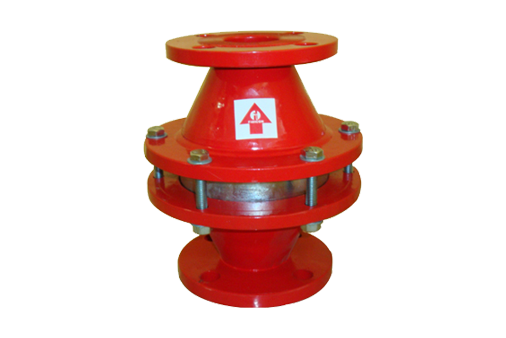
A Flame Arrestor is a critical safety device designed to prevent the propagation of flames and explosions through pipelines, storage tanks, process vessels, and vent systems containing flammable gases or vapors. It works by absorbing and dissipating the heat of a flame front through a specially designed flame-arresting element, effectively extinguishing the flame before it can pass through the device.
Flame Arrestors are widely used in industries such as oil & gas, petrochemicals, chemicals, pharmaceuticals, power generation, paint manufacturing, solvent storage, and fuel handling systems. They provide essential protection for personnel, equipment, and facilities by preventing fire hazards and minimizing the risk of catastrophic explosions.
Manufactured in accordance with international safety standards, Flame Arrestors are available in various designs for end-of-line, inline, deflagration, and detonation protection applications.
Applications of Flame Arresto
Sight Flow Indicators are widely used in:
- Oil & Gas Facilities
- Petrochemical Plants
- Chemical Processing Industries
- Pharmaceutical Manufacturing
- Fuel Storage Tanks
- Solvent Storage Systems
- Paint and Coating Industries
- Biogas and Landfill Gas Systems
- Power Generation Plants
- Marine and Offshore Installations
Features of Flame Arresto
- Prevents flame propagation and explosion transmission
- High safety and reliability in hazardous environments
- Robust and corrosion-resistant construction
- Low pressure drop with high flow capacity
- Suitable for gas, vapor, and fuel handling systems
- Easy inspection and maintenance
- Available for inline and end-of-line installations
- Designed to meet international safety standards
Available Options
-
 Inline Deflagration Flame Arrestors
-
End-of-Line Flame Arrestors
-
Detonation Flame Arrestors
-
Weather Hood Protection
-
Drain Connections
-
High-Temperature Designs
-
Special Alloy Construction (Hastelloy, Monel, Duplex SS)
-
Customized Sizes and Connections
-
Explosion-Proof Accessories
Specifications
| Parameter | Details |
|---|---|
| Product Name | Flame Arrestor |
| Type | Inline / End-of-Line / Deflagration / Detonation |
| Size Range | 15 NB to 1200 NB (½" to 48") |
| Body Material | Carbon Steel, SS 304, SS 316, SS 316L, Aluminum |
| Flame Element Material | SS 304, SS 316, SS 316L |
| Connection Type | Flanged, Threaded, Wafer Type |
| Flange Standard | ANSI, ASME, DIN, BS, IS |
| Operating Pressure | Vacuum to 10 Bar (Higher on Request) |
| Operating Temperature | -40°C to +250°C |
| Suitable Media | Flammable Gases, Vapors, Hydrocarbon Fumes |
| Element Design | Crimped Ribbon / Corrugated Element |
| Pressure Drop | Low Resistance Design |
| Installation | Horizontal or Vertical |
| Testing | Flow Test, Pressure Test, Flame Transmission Test |
| Compliance | API 2000, ISO 16852, ATEX, EN Standards |
Benefits
Flame Arrestors provide essential protection against fire and explosion hazards in systems handling flammable gases and vapors. By preventing flame transmission, they help safeguard personnel, equipment, and valuable assets while ensuring compliance with safety regulations. Their robust construction, reliable performance, and low maintenance requirements make them an indispensable safety component in industrial processing and storage systems.
Working Principle
A Flame Arrestor contains a flame-arresting element made of closely spaced metal passages. When a flame attempts to pass through the device, the element absorbs and dissipates the flame's heat, reducing the temperature below the ignition point of the gas mixture. This extinguishes the flame and prevents it from traveling further through the pipeline or vessel, thereby protecting the system from fire and explosion hazards.